
A park toilet can appear to be a small part of a massive public undertaking. But the construction of that one building might require landscape architects, engineers, contractors and permitting authorities, material suppliers as well as fixture manufacturers as well as the owner.
Every transition poses a simple but crucial question.
Who is responsible for making sure that an element connects in a proper manner?
For park owners and project teams comparing the best park restroom designers, that question can be more revealing than looking through a portfolio of finished buildings.
Be aware of the Handoffs
Consider a concept for the bathroom. The dimensions are correct and the style of the outside is decided and everyone is happy with it.
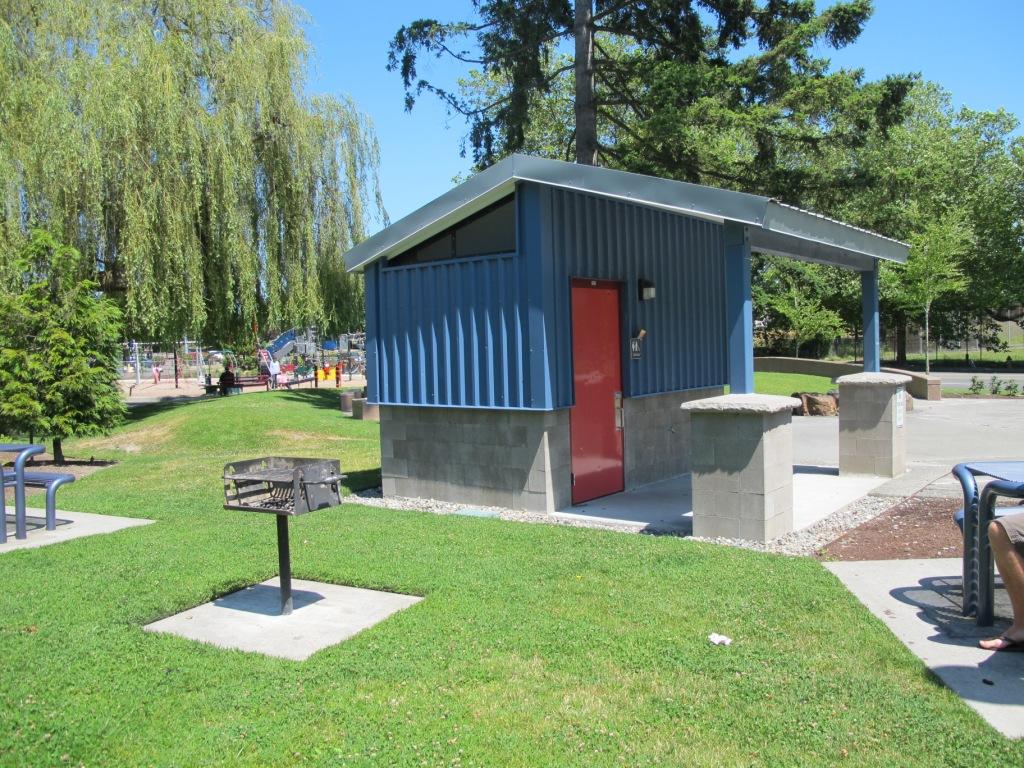
Image credit: romtec.com
Then engineering begins. It is necessary to make changes and this affects the layout. The adjustment impacts a component specification, which affects procurement. Afterward, the contractor figures out that an assumption in the design does not correspond to what was supplied.
These issues do not necessarily signify that someone has made an error that is serious. These situations illustrate how coordination is difficult when responsibility has been split among several parties.
The best park design candidate should therefore be judged on more than creativity. Understanding codes, components engineering requirements, documentation, construction realities, and accessibility standards can assist make design decisions that are connected to the final product.
Find out what the proposal actually Doesn’t Include
Two seemingly similar building proposals may have very different scopes.
It could include an entire building package. A different option could be preliminary design help drawings, specifications, renderings, engineered drawings, submissions, supplies, and possibly installation.
Comparisons based solely on the lowest price could be misleading.
Romtec offers preliminary designs, estimates, specifications, renderings, and drawings for design free of charge upfront. After acceptance, the process is extended to include submissions that are complete and engineered plans.
That gives owners and design teams a better path to taking an idea from a sketch to an actual building.
Custom Requirements require early attention
Rarely do public projects exist with the same requirements.
A community may require fixtures and other materials that are environmentally friendly. Another may have a specific architectural theme. A landscape architect might need custom siding, unusual colors, or a roof configuration that visually connects the restroom to other structures in the park.
These choices can have a greater impact than appearance. They could impact components, documentation and engineering.
When addressing specific requirements early the team has the possibility to add them instead of having to retrofit after major decisions have been made.
Construction knowledge can alter the design dialogue
The most skilled park bathroom designer should be able to understand that sketches will eventually be a reality.
Romtec manufactures, provides construction and design of buildings for use in public applications. It can offer building packages to be integrated into larger projects, or turnkey installations.
That design-to-construction experience creates a practical perspective: decisions made at a desk eventually have consequences on a jobsite.
Do not just evaluate the destination, but also the journey
The bathroom that was finished doesn’t reflect the amount of planning that was done prior to the opening.
The building is visible for park owners. Visitors are able to see the structure. The team working on the project also experiences everything that has gone before, including design decisions, estimations, documentation and engineering, along with supply approvals, construction and design.
That’s why choosing a park-building partner shouldn’t begin and end with a question like “Do we like their buildings?”
A more useful question is:
Are you able to help us get the building from our minds to a structure that is accessible to the public?