
The treasurer owns the accounting software. The president owns an entire file of documents that govern the organization in cloud storage. Residents have their emails spread across their individual inboxes. Someone has the photos of the violations on their phones. A board member also knows the password to the website.
Technically, everything is present.
Finding the right one is another issue.
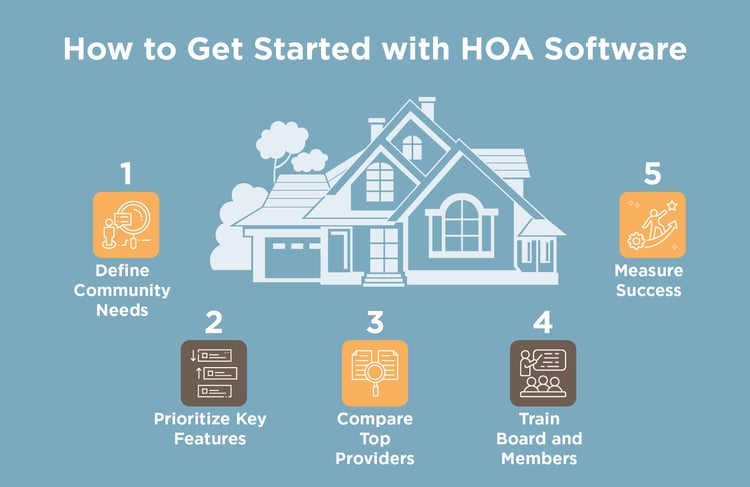
If you have a homeowners association that is self-managed, administrative complexity often grows by one tiny workaround at one time. A spreadsheet could solve one issue. Another is solved with the group chat. The board also provides sharing storage, accounting websites payment online, and another method of communicating with residents.
In the end, volunteers are spending almost equally time managing tools as they do coordinating the community.
The problem isn’t with self-management.
Self-management allows a group to take full control of its activities. The problem is that board members are volunteers, not full-time administrators.
The board still has to collect assessments, keep track of owners’ information, document expenses, and maintain contact with residents. They must also document violations, organize documents make reports, and keep the records.
Good HOA management software should reduce that administrative load without taking control away from the association.
Perfect HOA achieves this by merging all records (units, finances, payments and communications) along with documents, violations, resident portal as well as meeting minutes into a cloud-based system.
Consider what happens when the homeowner moves.
Centralized records make it easier to manage the administrative duties of the organization. Instead of updating an address on one spreadsheet, updating another contact list, checking another payment system and manually adjusting access to the website The information is applied to all of the administration of the organization.
The Treasurer shouldn’t be required to reconstruct the financial picture.
HOA finances can cause an issue similar to that when the information is fragmented.
Every bank transaction takes place in a single location. Assessment payments arrive somewhere else. The budget might be an Excel spreadsheet. The treasurer needs to prepare an answer when someone asks about the actual expenses against the annual plan.
HOA Accounting Software is more useful when it’s integrated into the day-to-day activities of the organization.
Perfect HOA syncs bank and card transactions using Plaid. It also allows you to classify the transactions and create reports like Profit and loss, Budget vs. actual cash flow. The operating, reserve and special-assessment accounts can be monitored separately.
It’s crucial to know that HOA accounting isn’t only about the production of an annual total. A board might want to know if landscaping costs exceed budget, and how much is remaining in a reserve account, or if assessments collections are in line with the budgeted expenses.
The less dependent the community is of a spreadsheet that is private and the less dependent it is on spreadsheets, the easier it will be to track down the answers.
Residents shouldn’t need to wonder What’s in the cupboards
Centralization can improve the resident experience.
Imagine the most frequently asked questions an HOA gets. What documents are there for my community? Did my payment get received? Where can I find the latest notice? Where can I access association information?
A good HOA site builder will provide more than a home page that is accessible to the public. Perfect HOA connects the community website to a portal for residents so owner information and documents are always connected to the management system that is in place.
It is no longer necessary to keep two sets of data One for the site and another for a boards.
Residents are also able to look into a rational way before contacting an elected board member to inquire for a service that is already in.
If things go wrong, it’s essential to have accurate track records.
It’s often months later than the initial test when an HOA administrative system will be put to the test.
A resident disputes the violation. Someone would like to know whether an official notification was sent. A new board wants know the reasoning for an older decision. An auditor needs financial information. In the midst of it all, a treasurer is dismissed.
At that point, the memory just isn’t sufficient.
Perfect HOA maintains communication histories and delivery details, as well as documents, and timelines for violations. A violation can include photographic evidence such as notices, escalation records, notices as well as related fines than being assembled from scattered emails after a disagreement is triggered.
Board meetings can also create records that must be maintained by the person who is in charge. The minutes generated by AIs can aid in reducing the time and effort to manually convert a long meeting into a valuable written record.
Self-management in an HOA involves people making decisions. Software can’t take over this responsibility.
The detective work needs to be eliminated.
Board members can have less time to think “Who is responsible for this?” and more time dealing with the issues that call for their judgment.
For a volunteer board, it could be the most efficient automation of all.